



Fissure Sealants
Some of the hardest teeth to keep clean are the very ones doing most of the chewing. The back teeth molars and premolars, have deep natural grooves (fissures) across their biting surfaces, and these grooves can be narrower than a single toothbrush bristle. Food and bacteria settle into them easily, and even careful brushing doesn't always reach all the way down. Fissure sealants are a simple, protective coating designed to close off that risk before decay has the chance to start.
What Is a Fissure Sealant?
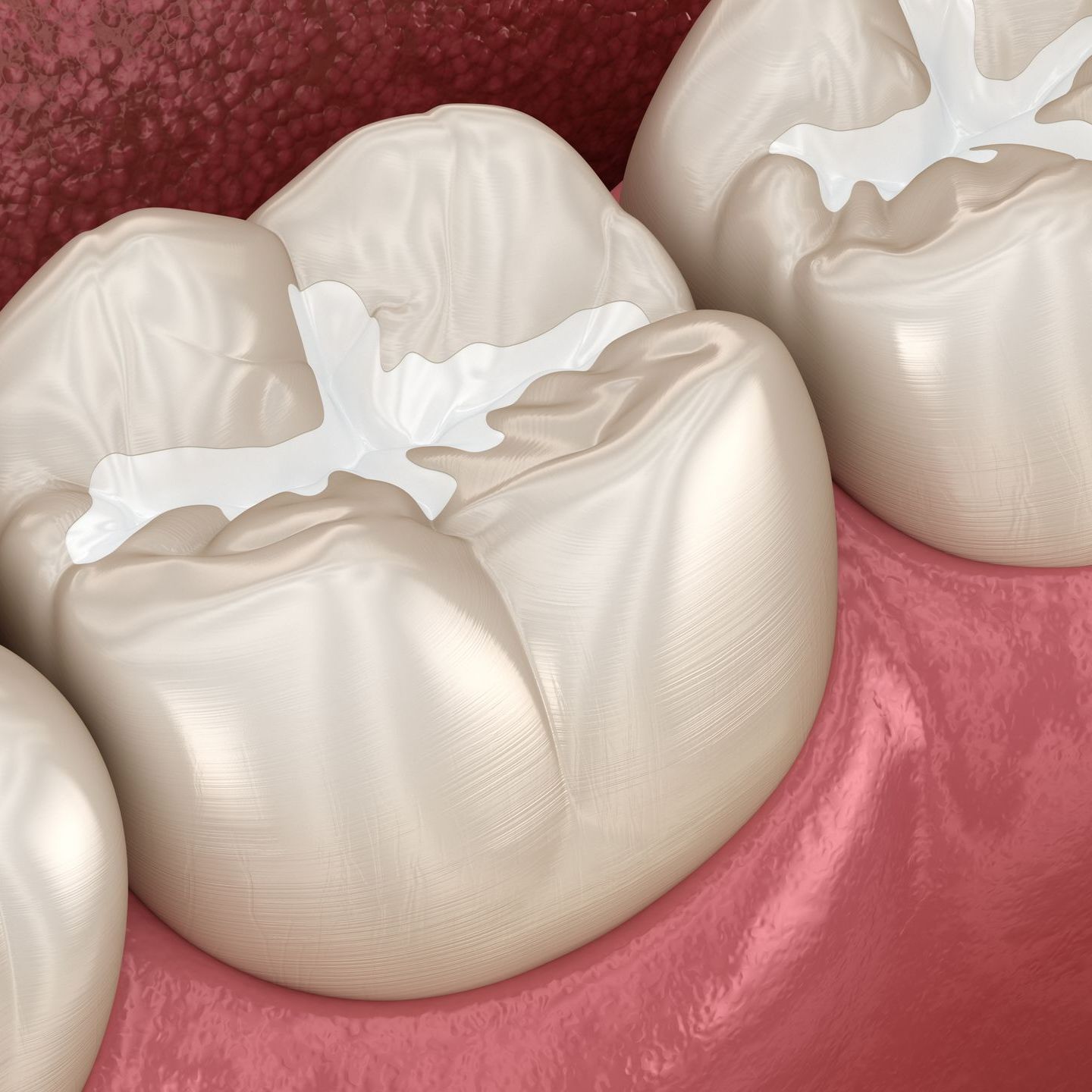
A fissure sealant is a thin layer of tooth-coloured or clear resin, painted onto the chewing surface of a molar or premolar. Once it sets, it fills in the tooth's natural grooves and pits, creating a smooth, easy-to-clean surface that stops food particles and plaque from settling into the deep crevices where decay most often begins.
Sealants are entirely painless to apply and don't involve any drilling or removal of tooth structure ,they simply sit on top of the existing tooth, acting as a barrier.
Who Are Sealants For?
Sealants are most commonly recommended for children and teenagers, applied as soon as possible after the adult back teeth come through, usually around ages 6 to 7 for the first permanent molars, and again around 11 to 14 as the second molars emerge. Catching these teeth early, before decay has a chance to develop, gives sealants the best possible impact.
That said, sealants aren't only for younger patients. Adults with particularly deep grooves in their molars, or a history of decay in those areas, can also benefit from having them sealed.
Why Choose Sealants?
- Adds a extra layer of decay prevention, on top of regular brushing, flossing and fluoride
- Targets the hardest-to-clean areas of the mouth, where a toothbrush often can't fully reach
- Quick and comfortable to apply, usually just a few minutes per tooth, with no injections or drilling needed
- Long-lasting protection, sealants typically hold up well for several years under normal wear, though your dentist will check them at routine visits
- Cost-effective, protecting a tooth is far simpler and less costly than treating decay once it's set in
Looking After Sealants
Sealants don't require any special care beyond your usual oral hygiene routine. Regular brushing, flossing and check-ups will help keep both the sealant and the tooth underneath in good condition. Your dentist will check the sealant at your routine visits to make sure it's still intact, and can top it up or reapply it if any wear is noticed over time.
Fissure Sealants
Fissure sealants help protect sound teeth from decay.
Sealants FAQs
Do fissure sealants hurt? No. Applying a sealant is completely painless. There's no need for numbing, drilling, or any preparation of the tooth itself.
How long do sealants last? With good oral hygiene, sealants can last several years, though they naturally wear down over time with everyday chewing. Your dentist will check them at each check-up and reseal if needed.
Do sealants replace the need for brushing and flossing? No. Sealants are an added layer of protection, not a substitute for a good daily oral hygiene routine.
Can adults get fissure sealants? Yes. While they're most often applied to children's newly erupted molars, adults with deep grooves or a higher risk of decay in their back teeth can benefit too.
Are sealants covered by dental schemes? Coverage varies depending on your dental plan or scheme. Speak to your TFBC clinian for guidance on costs and what may be included under your particular plan.
As a guide, the costs of some common private dental treatments are listed on our costs page.