

Getting Used to Your Dentures
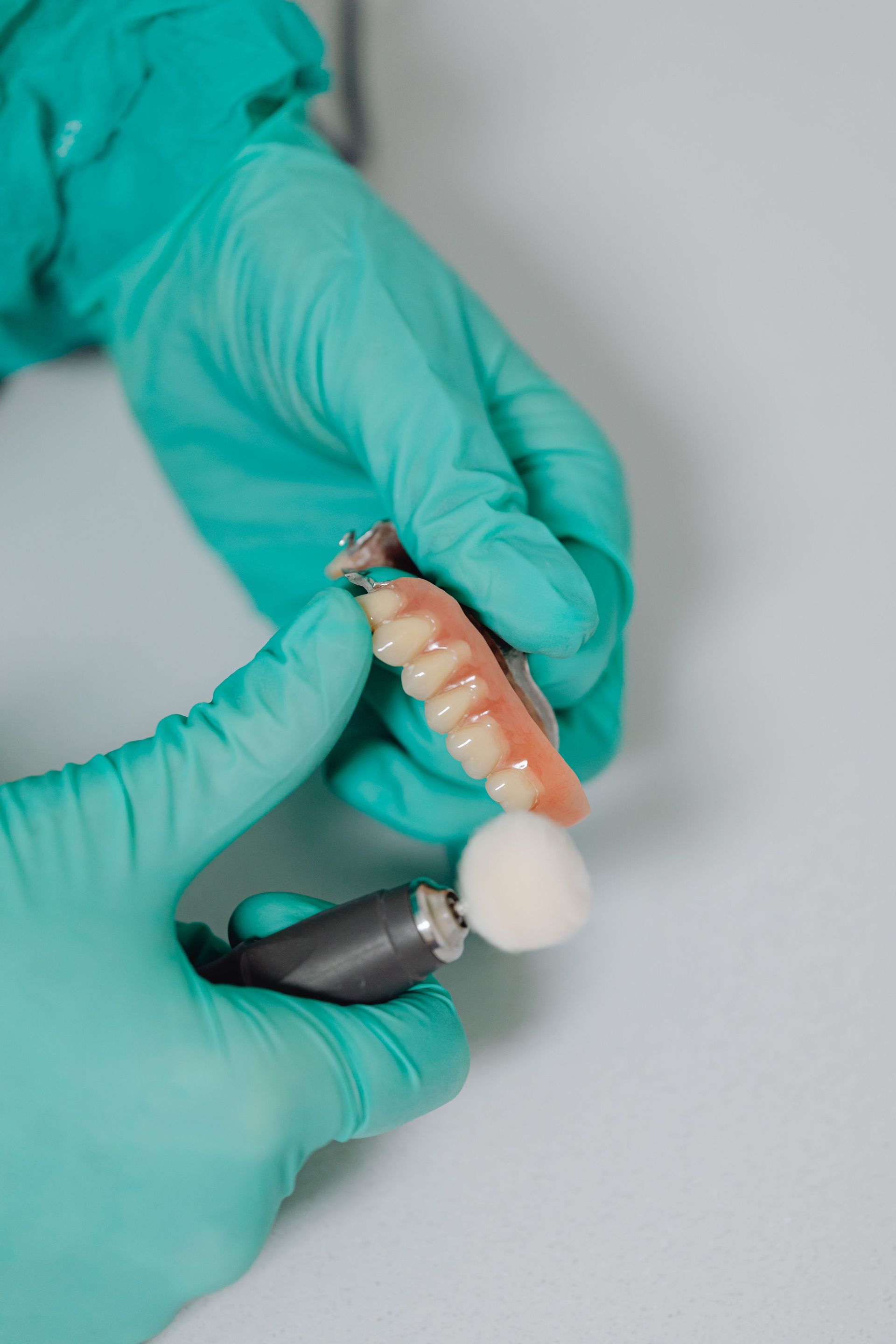
New dentures will feel different at first, that's completely normal. Most patients notice increased saliva, a change in how food tastes, and some initial awkwardness with speech, all of which typically ease within a few weeks as your mouth adapts. Practising reading aloud can help speech adjust faster, and starting with softer foods cut into small pieces makes eating easier while you find your rhythm.
It's best to wear your dentures throughout the day and only remove them at night. This gives your gums a chance to rest and reduces the risk of irritation, while also giving you the opportunity to clean your dentures thoroughly before the next day.
Caring for Your Dentures
Clean daily
Brush your dentures every day with a soft brush and a non-abrasive cleaner (not regular toothpaste, which can be too abrasive for denture material) to remove plaque and food debris.
Soak overnight
Most dentures need to stay moist to keep their shape; soak them in water or a denture-cleaning solution overnight, and use denture-cleaning tablets periodically to lift stains and bacteria.
Handle with care
Clean your dentures over a folded towel or a basin of water, as they can crack if dropped on a hard surface.
Keep your mouth clean too
Even without natural teeth, gums, tongue and any remaining teeth should be brushed daily to keep your mouth healthy and comfortable.
Use adhesive if needed
A denture adhesive can help improve stability and stop food particles working their way underneath, letting you eat a wider range of foods with confidence.
Don't attempt DIY repairs
If a denture cracks, chips or stops fitting well, bring it to your dentist rather than trying to fix or adjust it yourself, which can cause further damage or an poor-fitting result.